Study Timers — Boost Your Grades with Structured Focus Sessions
Effective studying isn't about how long you sit at your desk — it's about how focused your sessions are. A dedicated study timer creates structure that your brain craves: clear start and end points, built-in rest periods, and a physical reminder to stay on task rather than drift to social media.
The Science of Studying with Timers
Cognitive research consistently shows that the human brain cannot sustain deep focus for more than 25-50 minutes without a decline in performance. Attempting marathon study sessions leads to mental fatigue, poor retention, and frustration. The solution is spaced, timed study blocks with mandatory breaks.
The Pomodoro Technique formalises this: 25 minutes of focused study, 5 minutes of rest, repeated four times, then a 20-30 minute longer break. Students who adopt this system report better concentration, stronger memory retention, and significantly reduced study-related anxiety.
Why Physical Timers Beat Phone Apps for Study
Your phone is a distraction machine. Every Pomodoro app on your phone is one swipe away from Instagram, YouTube, and messaging apps. Physical study timers eliminate this risk:
- No notifications, no alerts, no temptation
- Setting the timer creates a deliberate start-of-focus ritual
- The ticking countdown (or silent LED display) keeps you anchored to the present session
- No battery anxiety — mechanical timers require no power at all
- Work in environments without phone signal (library quiet zones, exam halls)
Best Study Timer Techniques for HSC and University Students
HSC students face enormous pressure in the final year of secondary school. The volume of content, combined with exam anxiety, makes structured study essential. Use a study timer to:
- Break subject content into 25-minute topics (one concept per Pomodoro)
- Practice past exam questions in timed blocks matching real exam conditions
- Use interleaving — alternate between different subjects in each session
- Track your daily Pomodoro count to monitor study hours accurately
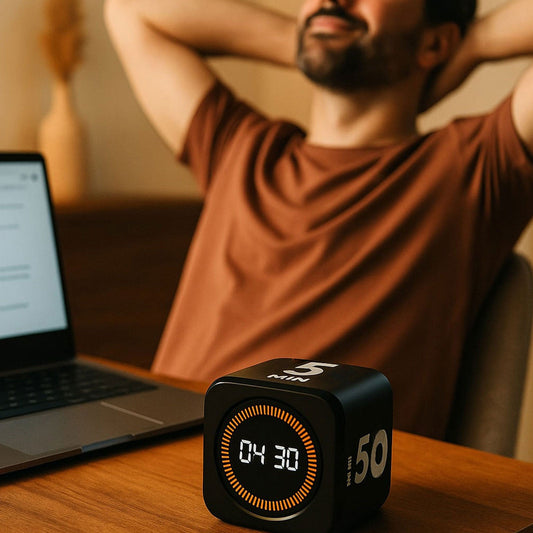
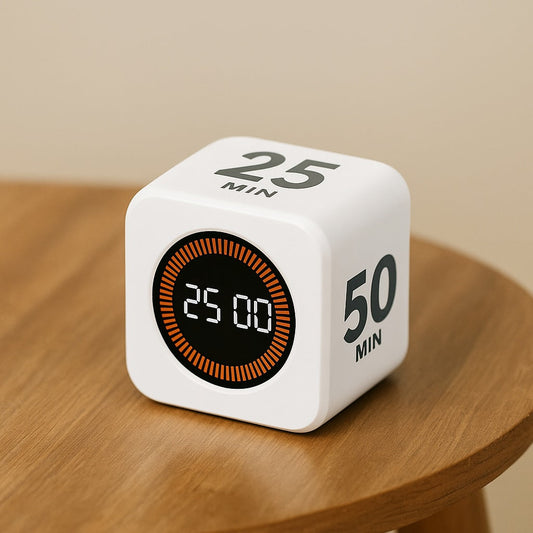
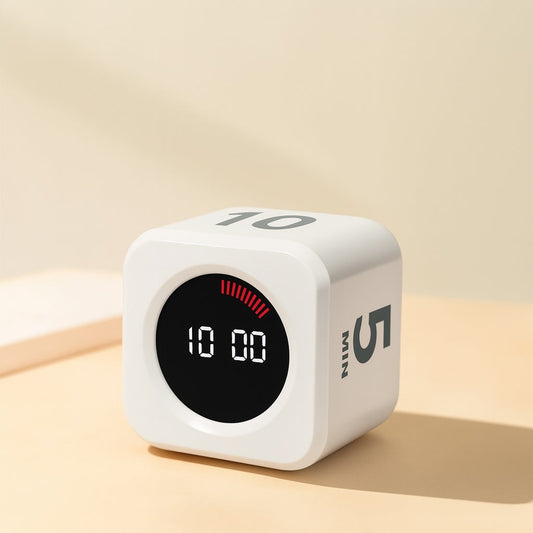
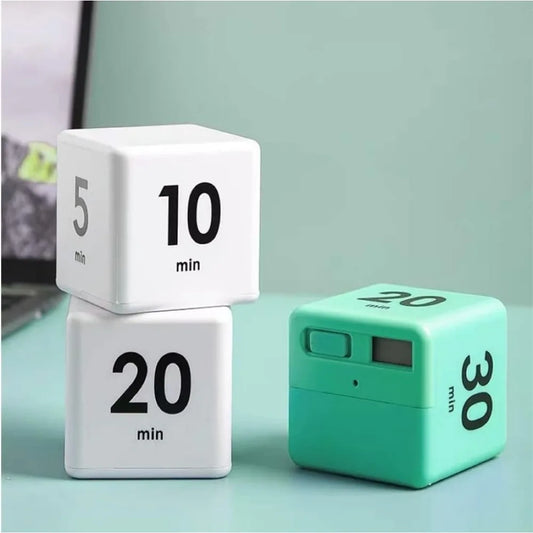
University students benefit from the flexibility of the Pomodoro system. Assignment writing, literature reviews, coding projects, and exam revision all work well in 25-50 minute focused blocks. A cube timer (flip to set time) is popular with uni students for its simplicity — no buttons to press, just flip and focus.
Choosing the Right Study Timer
-
Silent countdown preferred — choose a timer without ticking for library use
-
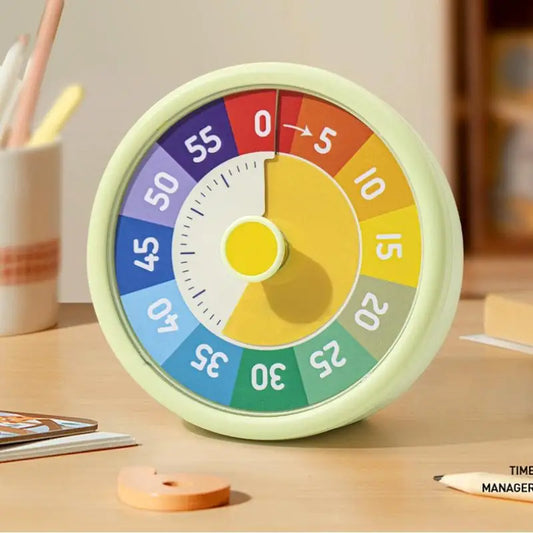
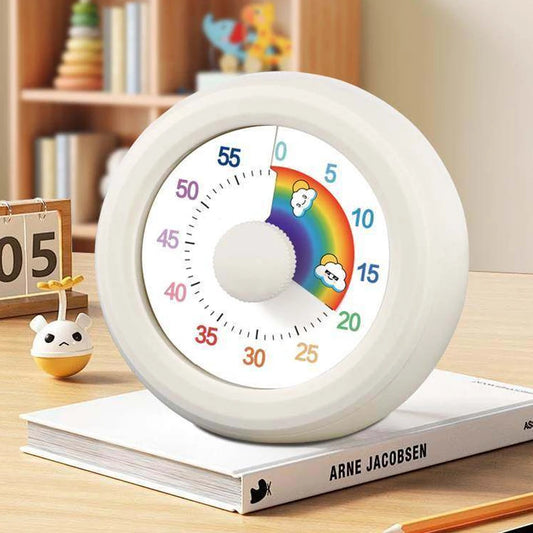
Visual progress display — see how much time remains without checking
-
Rechargeable — no need to carry spare batteries to the library
-
Compact — fits in a study bag alongside textbooks and laptop
-
Alarm type — quiet chime for shared spaces; louder alarm if studying alone
Study Timer Strategies That Actually Work
The 2-minute rule start: If you're struggling to begin, commit to just 2 minutes. Set the timer for 2 minutes of work. Almost always, starting is the hardest part — momentum takes over from there.
Reward stacking: After every 4 Pomodoros (2 hours of focused study), reward yourself with something enjoyable — a snack, a favourite YouTube video, a walk. The reward reinforces the study habit.
Context switching prevention: When a distraction thought appears during a Pomodoro (e.g., "I need to message Jake"), write it on a notepad and return to studying. The timer is your anchor — honour the commitment until it rings.
Pre-session planning: Before starting the timer, write exactly what you will study in that Pomodoro. "Chapter 7, pages 45-60" beats "chemistry study" because specificity eliminates the decision-making that wastes time at the start of each session.
Study Timers for Group Study Sessions
Group study is notoriously inefficient without structure. Bringing a physical timer to a study group creates shared accountability. Set the timer, work in silence for 25 minutes, then discuss and clarify for 5 minutes before the next Pomodoro begins. Everyone focuses more when there's a visible countdown on the table.
Flowtime Technique for Study Sessions
Many students find that the Flowtime Technique works better than rigid Pomodoro intervals for reading-heavy subjects and problem-solving. Set your study timer as a soft check-in rather than a hard stop — work until your focus naturally fades, then take a proportional break. For memorisation, switch back to 25-minute Pomodoro sessions. The best students use both techniques, matching the timer method to the study activity.
Frequently Asked Questions
- How long should study sessions be?
- Research suggests 25-50 minutes is optimal for most subjects. Start with 25 minutes if you're struggling with focus; work up to 50-minute blocks as your concentration improves.
- How many Pomodoros should I do per day?
- Most students target 8-12 Pomodoros per day (3.5-5 hours of focused study). Quality beats quantity — 8 fully-focused Pomodoros outperforms 16 distracted ones.
- What is the best study timer for HSC?
- A silent visual timer with a 60-minute face is ideal. It shows progress at a glance, won't disturb family members, and creates clear session boundaries.
- Can I use a study timer for exams?
- Practice with a timer regularly to build comfort with timed conditions. Time pressure in actual exams won't feel as stressful when you've trained with a timer daily.
- Does the Pomodoro Technique work for university assignments?
- Yes — many students find it ideal for long assignments. Use one Pomodoro for outlining, one for each major section, and one for proofreading.