Kitchen Timers — Precise Timing for Perfect Results Every Time
A reliable kitchen timer is one of the most practical tools in any cook's arsenal. From boiling eggs to slow-roasting meat, from bread proving to pasta cooking, precise timing is the difference between good food and great food. Our kitchen timers combine accuracy, ease of use, and durable construction to become an indispensable part of your kitchen routine.
Beyond Cooking — Kitchen Timers for the Whole Home
While "kitchen timer" suggests a single use case, the versatility of a quality kitchen timer extends throughout the home:
-
Cooking — obvious, but worth noting: timing multiple dishes simultaneously, monitoring oven temperatures, baking precision
-
Exercise — HIIT intervals, rest periods between sets, yoga poses
-
Productivity — Pomodoro focus sessions, meeting time limits, work intervals
-
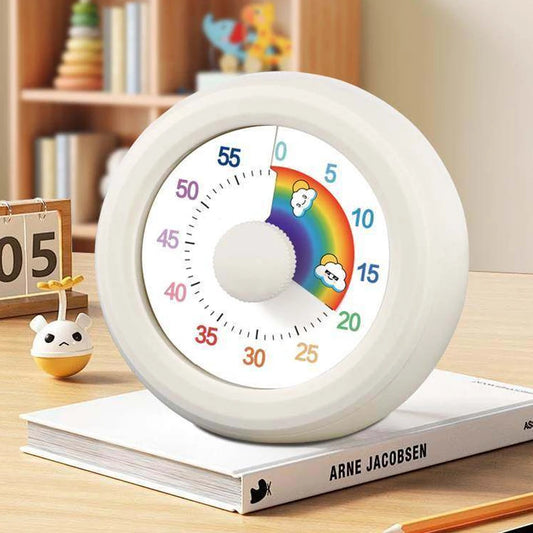
Children's routines — homework time, screen limits, getting ready
-
Medication timing — reminder alarms for supplements and prescriptions
-
Games — board game time limits, charades, quiz competitions
Types of Kitchen Timers
Mechanical kitchen timers are the classic choice. Wind the dial to your desired time and release. The spring mechanism ticks down and rings a bell at zero. No batteries required, no charging, no electronic failure points. The satisfying tick creates gentle auditory feedback while cooking.
Digital kitchen timers offer precise countdown to the second, multiple simultaneous timers, and often include clock functions. They're ideal when you need exactness — competitive baking, following complex recipes, or timing multiple dishes to land at the same time.
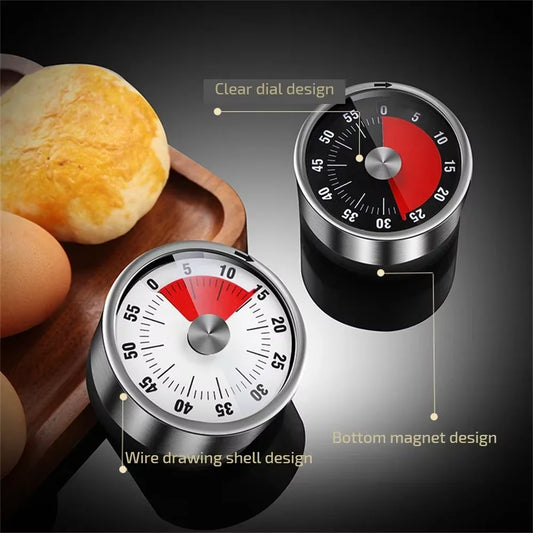
Magnetic kitchen timers attach to the fridge, oven, or any magnetic surface, keeping them visible and accessible without occupying counter space.
The Classic Tomato Timer — An Australian Kitchen Favourite
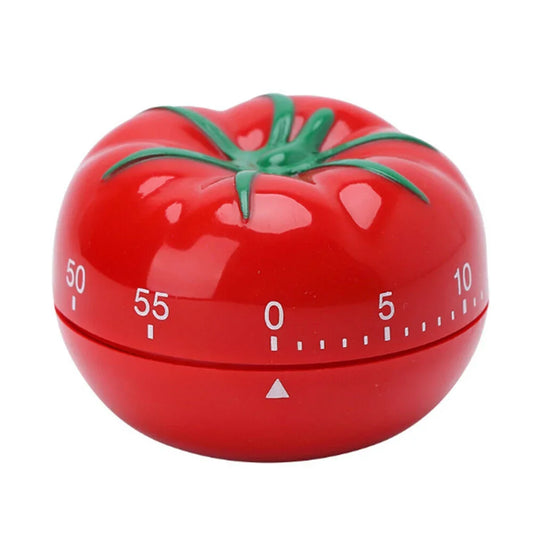
The iconic tomato-shaped kitchen timer has been a household staple for generations. Originally inspired by the "pomodoro" (Italian for tomato) that Francesco Cirillo used when developing the Pomodoro productivity technique, these cheerful red timers have become symbols of both kitchen efficiency and focused work.
Classic tomato timers are fully mechanical — no batteries, no charging, no screens. Wind to 60 minutes and release. The gentle ticking provides subtle time awareness while you cook; the bright ring announces completion loud and clear. Their durability means many households have used the same tomato timer for decades.
What to Look for in a Kitchen Timer
-
Loud, clear alarm — audible from across the kitchen, especially over cooking noise
-
Easy to set — one-hand operation while your other hand holds something
-
Magnetic backing — keep it on the fridge door, not lost in a drawer
-
60-minute minimum — covers most cooking tasks; 99+ minutes preferable for slow cooking and bread
-
Durable — kitchens are tough environments; choose impact-resistant materials
-
Accurate — within a few seconds per session; critical for precise baking
Kitchen Timer Tips for Better Cooking
Set timers earlier than needed: For tasks requiring monitoring (sauce reduction, caramel), set the timer 5 minutes before the expected finish. This gives you check-in time before it's too late to correct.
Use multiple timers for complex meals: When cooking multiple dishes, use a separate timer for each. Many cooks keep 2-3 kitchen timers for Sunday roasts and dinner parties.
Timer for proofing dough: Bread proofing requires precise timing — too short and the bread won't rise; too long and it over-proves. A kitchen timer ensures you hit the window every time.
Frequently Asked Questions
- What is the most accurate kitchen timer?
- Digital kitchen timers are most accurate, typically within 1-2 seconds. Mechanical timers are slightly less precise but more than accurate enough for everyday cooking.
- Do I need a kitchen timer if I have a microwave timer?
- A dedicated kitchen timer is more convenient — you don't have to walk to the microwave to set it, and it can travel with you around the kitchen. It also frees up the microwave panel for microwave use.
- What's the loudest kitchen timer?
- Mechanical bell timers are typically louder than digital beepers. If you need to hear it through an extractor fan and from another room, choose a mechanical model.
- How long do kitchen timer batteries last?
- Digital kitchen timers typically use AA or AAA batteries lasting 6-12 months with daily use. Rechargeable models eliminate battery costs entirely.
- Can I use a kitchen timer for the Pomodoro Technique?
- Yes! In fact, the Pomodoro Technique was named after a tomato-shaped kitchen timer. Any kitchen timer works perfectly for 25-minute Pomodoro sessions.