Collection: Kids Timers
Kids Timers — Make Time Management Fun and Stress-Free
Getting children to understand and respect time is one of parenting's great challenges. Abstract clock faces mean little to young children; telling them "5 more minutes" creates conflict rather than cooperation. A kids timer changes everything — it makes time visible, concrete, and fair, removing the parent from the role of timekeeper and letting the timer be the neutral authority.
Why Children Struggle with Time
Children's prefrontal cortex — the brain region responsible for time perception and impulse control — is still developing throughout childhood and into early adulthood. Young children genuinely cannot feel time passing the way adults can. They're not being difficult when they ignore "5 more minutes" — they simply have no internal sense of what 5 minutes means.
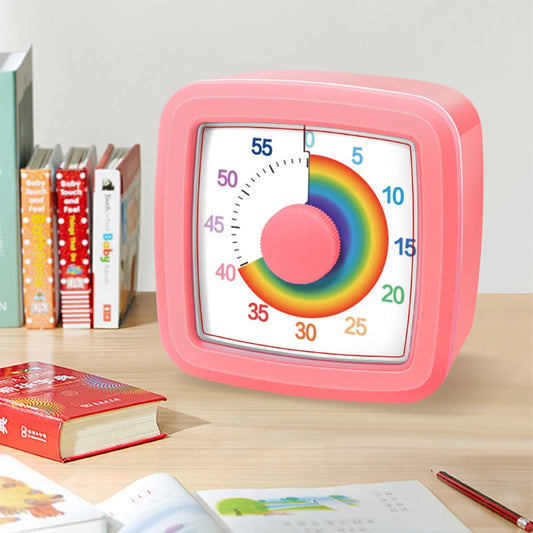
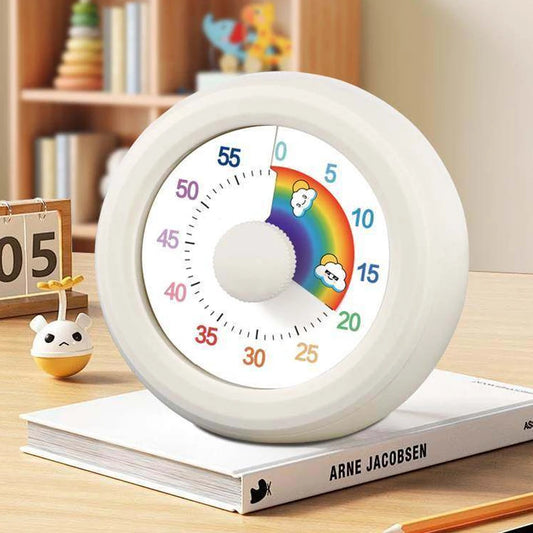
A visual timer solves this by externalising time. When a child can see how much time remains (a shrinking colour arc, disappearing LED segments), they develop a functional understanding of time that verbal reminders cannot provide.
Common Uses for Kids Timers at Home
-
Screen time management — the child sees exactly how much TV or iPad time remains; no arguments when the timer rings
-
Homework sessions — structured 20-minute homework blocks with 5-minute breaks reduce after-school battles
-
Morning routines — timed segments for brushing teeth, getting dressed, eating breakfast
-
Bedtime routines — wind-down timer reduces resistance and makes bedtime predictable
-
Chores — timed chore sessions feel fair; children are more willing to clean for 10 minutes than to "clean until it's done"
-
Time-out management — neutral, visual timeout timer reduces power struggles
-
Game time limits — children respect the timer's authority better than a parent's word
-
Cooking and baking with kids — teach cooking concepts using timer cues
Kids Timers in Schools and Childcare
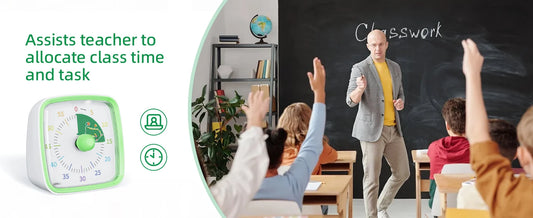
Teachers and childcare workers have used visual timers for decades. In early childhood settings, timers help manage:
- Activity transitions — children prepare for the change as the colour shrinks
- Sharing and turns — "it's your turn for 5 minutes, then we swap"
- Cleanup time — a visual countdown makes tidying up a race against the clock
- Quiet reading time — children see exactly how long reading time lasts
- Group activities — fair time distribution for presentations or sharing circles
Features to Look for in Kids Timers
-
Large, colourful display — bright colours hold children's attention and are easy to understand
-
Simple to set — children as young as 4-5 should be able to set the timer themselves (empowerment is key)
-
Durable construction — kids will drop it; choose timers with solid build quality
-
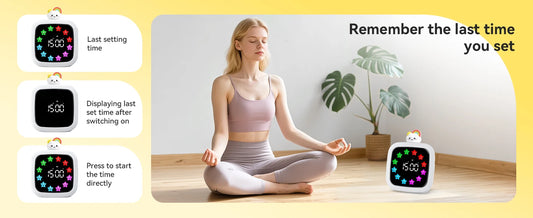
Fun design — character-themed or brightly coloured timers are more engaging for young children
-
Adjustable alarm — quiet enough for calm home environments; louder for busy households
-
Magnetic backing — stick to the fridge for kitchen use during cooking or chores
-
60-minute capacity — covers all common home and school timing needs
Age-Appropriate Timer Use
Ages 2-4: Use timers primarily for transitions. Keep times very short (2-5 minutes). The timer is set by the parent; the child watches the colour disappear.
Ages 5-7: Children can begin setting the timer themselves for familiar routines. Involve them in the process — "how many minutes do you think you need to clean your room?"
Ages 8-12: Children can use timers independently for homework and screen time. Let them manage their own Pomodoro sessions to build autonomy and time management skills.
Teenagers: Cube timers and more sophisticated visual timers appeal to older children who want something more mature-looking than a character timer.
Frequently Asked Questions
- What age can children start using visual timers?
- Children as young as 2-3 years can understand and respond to visual timers. The colour cues are intuitive even before children can read numbers.
- Do kids timers reduce tantrums?
- Many parents report significant reductions in transition tantrums once visual timers are introduced. The timer becomes the neutral authority rather than the parent.
- How long should screen time be for children?
- Australian guidelines recommend no screen time for children under 2, 1 hour per day for ages 2-5, and 2 hours per day for ages 5-17. Visual timers make enforcing these limits straightforward.
- Can visual timers help children with autism?
- Visual timers are widely used in autism therapy and education. They provide predictable transition warnings that significantly reduce anxiety around activity changes.
- How do I get my child to respect the timer?
- Involve them in setting the timer and make the timer the authority ("the timer decides, not me"). Consistency is key — follow through every time the timer rings.